
The Operational Velocity Index Explained: Measuring How Fast Strategy Becomes Value
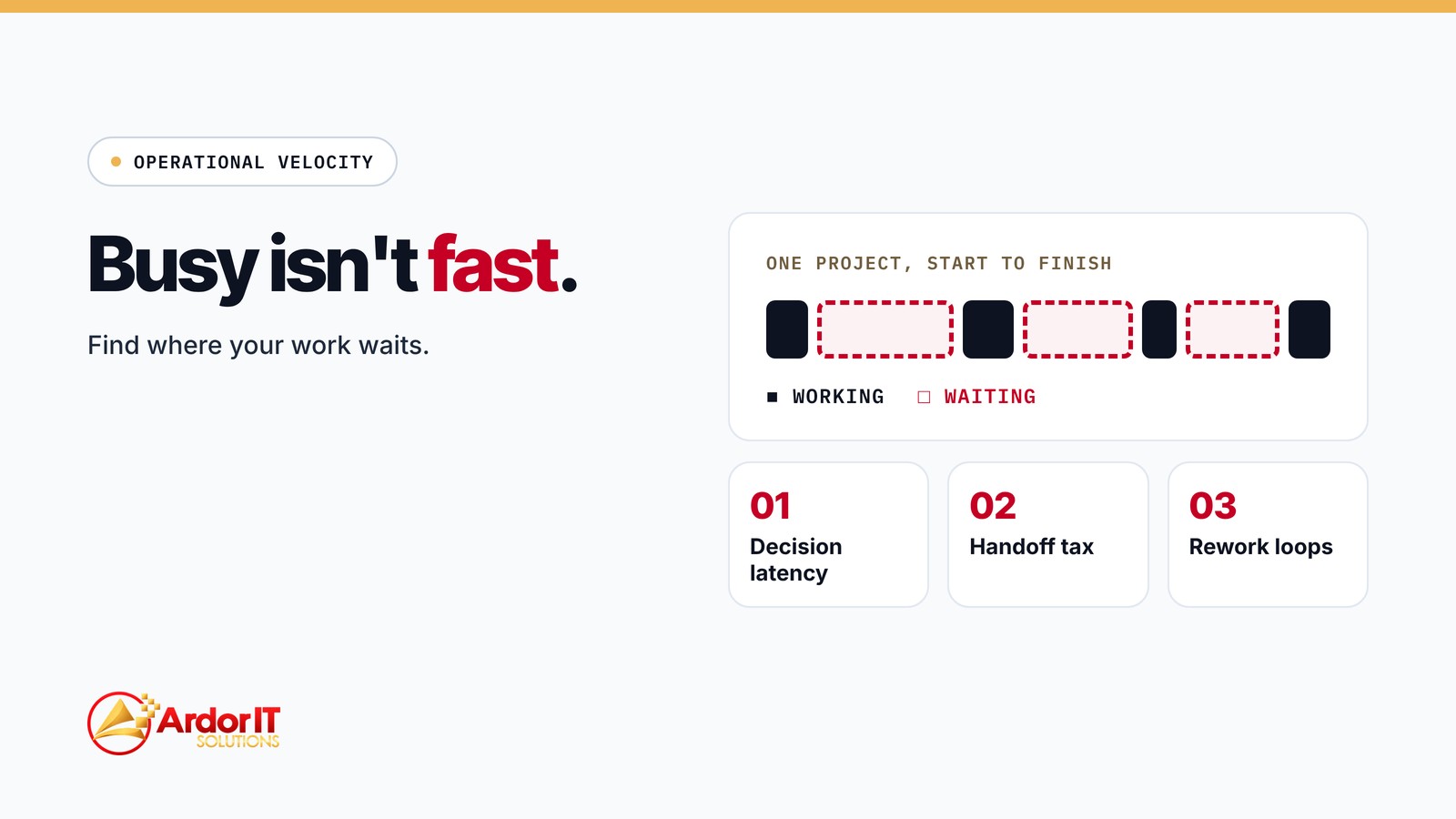
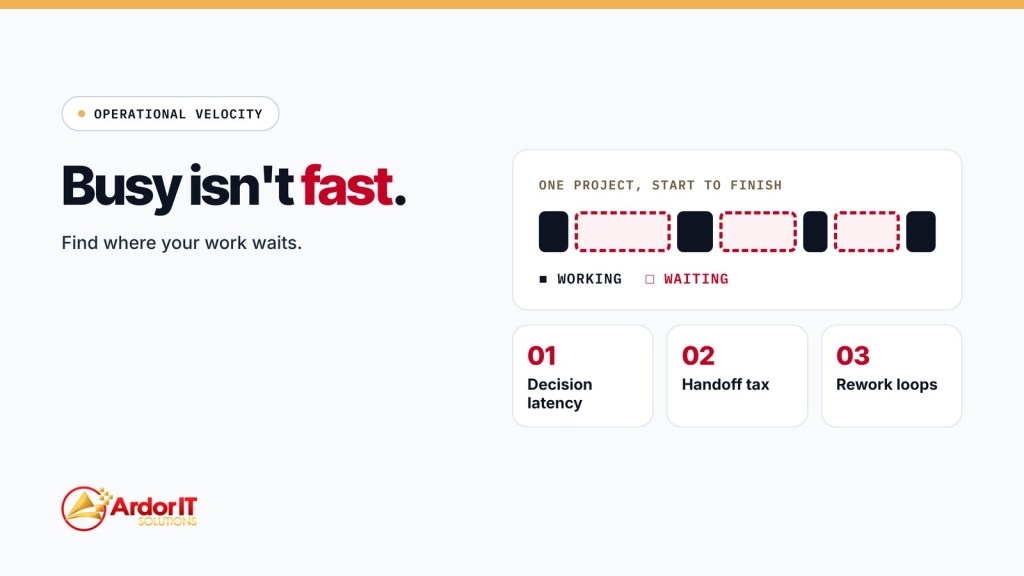
A delivery team can be fully occupied and still struggle to ship. Developers finish their work, a request enters a review queue, someone asks for clarification, and a release waits for the next approval window. Every person can point to real activity, but the business still waits for an outcome.
The difference between work happening and work moving is the precise starting point for the Operational Velocity Index, or OVI. In practical conversations, OVI helps leaders examine where an initiative loses time around decisions, handoffs, and repeated work.
It’s not a reason to assume every late project suffers from the same problem. It’s a way to ask better questions before prescribing an answer.
Busy isn’t the same as moving
Most reporting tools make it relatively easy to count activity: tickets closed, meetings held, hours used, and tasks assigned. Those measures can have a place, but they don’t explain why a deliverable spent weeks between an approved idea and a usable result.
To understand that path, look at the time elapsed. When was the request ready to move? When did the next person begin working on it? How much of the journey involved active work, and how much was waiting? Where did completed work come back for another pass?
The aim is to understand an actual flow of work, not to assign blame to the team standing nearest the bottleneck.
Three places to look for lost velocity
1. Decision latency
A change may be ready to release but unable to proceed without an answer about scope, risk, budget, or ownership. The decision itself may be simple; reaching the right person, gathering the information, and finding an approval window may not be.
Ask: Which decision was needed, who had the authority to make it, and how long did the request wait before the answer arrived?
2. The handoff tax
Work often moves through product, IT, security, finance, operations, and other functions. Some handoffs are necessary. Others create a new queue, require context to be rebuilt, or leave responsibility unclear. A handoff becomes expensive when the next person can’t act with the information they receive.
Ask: What context has to be explained again every time this request moves, and what would help the next owner proceed?
3. Rework loops
Requirements change. Feedback arrives after a build. A dependency comes to light in testing. The team revisits work everyone thought was complete. Some rework is unavoidable and sometimes valuable. Repeated preventable rework is a signal worth investigating.
Ask: What information surfaced late, and where could the team have learned it earlier?
Build a baseline from one real initiative
You don’t need a complex score to begin learning. Select one representative release, implementation, or cross-team request. Trace it from the moment the work was accepted until someone could use the result.
- Write down each stage and its owner. Include business approval, technical work, review, release, and any relevant follow-up.
- Record when a stage became ready and when work actually resumed. Separate elapsed waiting time from active work where evidence allows.
- Mark each handoff, reopened item, or repeated approval. Note what information was missing.
- Check your interpretation with the people doing the work. A calendar gap may reflect a necessary control, not an avoidable delay.
- Choose one change to test and observe the next comparable request. Keep the definition of the measure consistent.
A useful baseline might include total elapsed time, time waiting for named decisions, handoff count, or the amount of work reopened after review. Treat these as locally defined observations, not as a validated, company-wide OVI formula.
Improving flow doesn’t mean removing every safeguard
Security reviews, finance approvals, quality checks, and other controls often exist for good reasons. The goal isn’t to erase them. It’s to make ownership clear, provide the needed evidence sooner, and help important decisions happen at the appropriate time.
The same diagnostic can prevent a staffing mistake. If the team lacks a required skill or enough capacity, additional qualified people may be appropriate. If the work is waiting on a decision no one owns, adding people may actually give you a larger queue. More people won’t necessarily fix a waiting problem, but that doesn’t mean more people can’t help.
Use the first finding to start a better conversation
An operational-velocity discussion should lead to a specific question, not a universal promise. Which release spent the most time waiting? Which team repeatedly receives incomplete requests? What approval could be prepared earlier?
These questions inform our broader technology and workforce solutions offerings, without assuming in advance that either service track is the answer. For more on the broader approach, see Ardor IT Solutions’ technology solutions overview.
The bottom line
Your team may be moving faster than your delivery timeline suggests. Before measuring how much everyone does, measure where a real piece of work stops. Understand the cause, protect the controls that matter, and improve one handoff or decision path at a time.
Find the bottlenecks before you add another initiative. Choose one delayed release or request and identify the decision, handoff, or rework loop that added the most avoidable time, then bring us your delivery questions for a focused conversation.